
Back in mid-November, before the looming terror of the COVID-19 Omicron variant left us all wondering if current mitigation efforts would be effective for it, Wes Fryer’s tweet reminded me about Anthea Butler‘s White Evangelical Racism: The Politics of Morality in America. It made me wonder, can we pretend to be righteous in full knowledge of what has been done?
An Aside: Rereading this blog entry, I am reminded of Bertrand Russell’s observations about religion. That it is a “source of untold misery to the human race.” No doubt, it is also a great comfort. But what if you are enslaved, and everything you know has been wiped out, then you are brainwashed from birth with the beliefs of the ones who enslaved you, absent key passages in the Bible that might lead you to question the structure you find yourself in?
It’s shocking to think that Bible’s were redacted, passages removed, by enslavers to keep enslaved peoples docile, not thinking of freedom. It makes you wonder if Revelation 22:19 had/has any meaning whatsoever in those days. What a mess.
I was intrigued to read the title of Butler’s book the first time I saw this in a Salon article. The concept of “evangelical racism” as a descriptor for Christianity was a bit of an eye-opener. Who wouldn’t be tempted to dump this brand of racialized un-christian fiction or lie into the trash? Probably the people who benefit from pushing this brand of crazy.
Why Think and Blog About This
If you read your history, not the lies in textbooks, you realize there’s a whole level of problems with how the United States of America was set up and works today. Changing America to be fair to all is built into the system by design. So is injustice. If you want to keep the status quo, you are laboring against the hope expressed in the Declaration of Independence and the Constitution. If you aren’t working to change things for the better, to eliminate oppression, then you are not working in the spirit of America or its best interests. [Do you agree with that perspective? Why or why not?]
Structural or institutionalized racism, a push to shove the dominant culture of white America steeped in oppression of Indigenous Peoples and Blacks imported enslaved to gather the cash crops that built the American economy, all of this combines to make one ask, “How do we deal with this? How do we process this as a nation?” It’s not enough to sweep it under the rug, to carry on as if nothing has happened, to leave it for discussion without questioning everything that discussion is based on.
The Woke Perspective
I remember my “Aha!” moment when I understood what the meaning of to be “woke” was. It came upon me when I realized I couldn’t look at anything I had learned in school, any of the advantages I had as a white privileged American of Swedish and Panamanian descent, and ask, “Wait, why is my experience better than others?”
The definition of woke is, “alert to injustice in society, especially racism.” Oppression of others because of the color of their skin is wrong. To profit financially while others suffer because you enjoy privilege that flows from injustice is wrong. You can’t use your interpretation of moral absolutes, or interpretations of holy books, to perpetrate evil on others…it remains wrong to hurt humans.
This willingness to isolate and exile, subjugate or oppress others due to skin color, etc. affects everything, including how we approach education. Ignore it at your peril.
Brutal Enslavement, Enlightened Enslavers? Nope.
…slavery was sin. Sin could not be solved by political compromise or sociological reform, abolitionists maintained. It required repentance; otherwise America would be punished by God. This unpopular message rankled an America that was pushing west, full of self-important virtue as God’s darling.It remains an unpopular message today. (source)
Butler reveals how evangelical racism, propelled by the benefits of whiteness, has since the nation’s founding played a provocative role in severely fracturing the electorate. During the buildup to the Civil War, white evangelicals used scripture to defend slavery and nurture the Confederacy. During Reconstruction, they used it to deny the vote to newly emancipated blacks. In the twentieth century, they sided with segregationists in avidly opposing movements for racial equality and civil rights.
Most recently, evangelicals supported the Tea Party, a Muslim ban, and border policies allowing family separation. White evangelicals today, cloaked in a vision of Christian patriarchy and nationhood, form a staunch voting bloc in support of white leadership. Evangelicalism’s racial history festers, splits America, and needs a reckoning now. (source)
The Haitian Revolution (French: révolution haïtienne French pronunciation: [ʁevɔlysjɔ̃ a.i.sjɛn]; Haitian Creole: revolisyon ayisyen) was a successful insurrection by self-liberated slaves against French colonial rule in Saint-Domingue, now the sovereign state of Haiti. The revolt began on 22 August 1791,[3] and ended in 1804 with the former colony’s independence. It involved black, biracial, French, Spanish, British, and Polish participants—with the ex-slave Toussaint Louverture emerging as Haiti’s most charismatic hero. The revolution was the only slave uprising that led to the founding of a state which was both free from slavery (though not from forced labour[4]) and ruled by non-whites and former captives.[5] It is now widely seen as a defining moment in the history of the Atlantic World.[6][7]Haiti at the beginning of the Haitian revolution in 1791.Its effects on the institution of slavery were felt throughout the Americas. The end of French rule and the abolition of slavery in the former colony was followed by a successful defense of the freedoms the former slaves won and, with the collaboration of already previously free people of color, their independence from white Europeans.[8][9][10]
The revolution represented the largest slave uprising since Spartacus’ unsuccessful revolt against the Roman Republic nearly 1,900 years earlier,[11] and challenged long-held European beliefs about alleged black inferiority and about slaves’ ability to achieve and maintain their own freedom. The rebels’ organizational capacity and tenacity under pressure inspired stories that shocked and frightened slave owners in the hemisphere.[12] (source)
I found this account of interest when reading about Haiti and religion, and while I am only gaining a better understanding, found this account to make sense:
From the founding moment of the new Haitian state, in the first Haiti’s Constitution, Catholic Christianity was declared the official religion of the Haitian state; technically, Haiti began as a Christian nation—not by individual confession or commitment to the Christian faith and values—but for political expediency and affiliation with the so-called “Christian nations” in the Western world).
White American and European missionaries created this tragic narrative to demonize the Vodou religion, disvalue the African element of the Haitian culture, and Christianize and westernize the Haitian people.
Haitian Protestant Christians unashamedly believe this discourse; they even own it and now boldly proclaim this peculiar narrative about the ambivalent role of religion and history in Haitian history. This attitude is such a terrible strategy to proselytize people to Protestant Christianity. (source)
What To Do?
Definition:
Inalienable or unalienable
Refers to that which cannot be given away or taken away.
Quotes to Reflect On
Evangelicalism is an Americanized Christianity born in the context of white Christian slaveholders. It sanctified and justified segregation, violence, and racial proscription.
Slavery and racism permeate evangelicalism….
Getting saved didn’t mean just leaving the world behind—it meant leaving whatever racial or ethnic or religious world you came from behind. It meant receiving the white version of Christ.
Evangelicals embraced racism…it reinforces a theological imperative buried in a practice of missionary endeavors. It considers other races and ethnic groups to be “less than” if they are either non-Christian or don’t practice Christianity according to Eurocentric cultural norms.”
Evangelical fruit—the results of evangelicals’ actions in civic life—today is rotten. Racism rotted it.
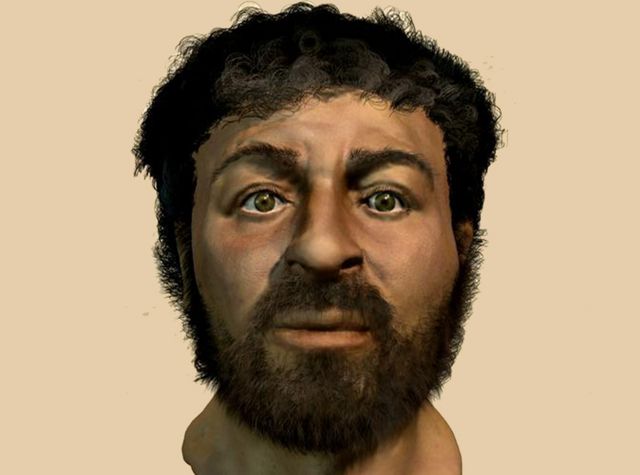 |
| What Did Jesus Look Like? |
But getting saved for Indigenous peoples “meant receiving the white version of Christ.” For the enslaved, forced to abandon their names, their cultures, their families, ripped away from everything that succored them, there is no other choice. I still recall reading Clint Smith’s translation of how the Spanish introduced Indigenous peoples to their mission…their version of Christianity made it OK to do horrible things. It’s not a stretch to imagine the same in America.
Discover more from Another Think Coming
Subscribe to get the latest posts sent to your email.
 Another Think Coming