Over at Blue Skunk Blog, my esteemed friend and inspiration, Doug Johnson shares this conclusion about how educators spend their money in K-12 schools. Part of the idea is that makerspaces may be a complete waste of funding if….
If the considered new technology, program, or method does not actually address a genuine need in the district nor does it align with the district’s mission and strategic plan, why even mess with the other criteria?
As I concluded earlier “A dollar spent on a failure is one less dollar spent on something beneficial to our students. New initiatives need to based on more than good sales pitch.”
It’s a zero sum game, folks. Let’s do our best to make each dollar count.
This kind of approach, “Let’s make each dollar count,” reminds me of the gunfighter’s credo, “Make every bullet count.” Unfortunately, this approach often sounds great but sells learners short.
In K-12 education, we are trying to create experiences that have a lasting, positive impact on our students. Insignificant experiences are the nuts-n-bolts of greater learning constructions our children engage in. Let’s not see makerspaces as yet another wasted investment, but rather, an opportunity to provide experiences that fundamentally prepare young learners for an undiscovered future.
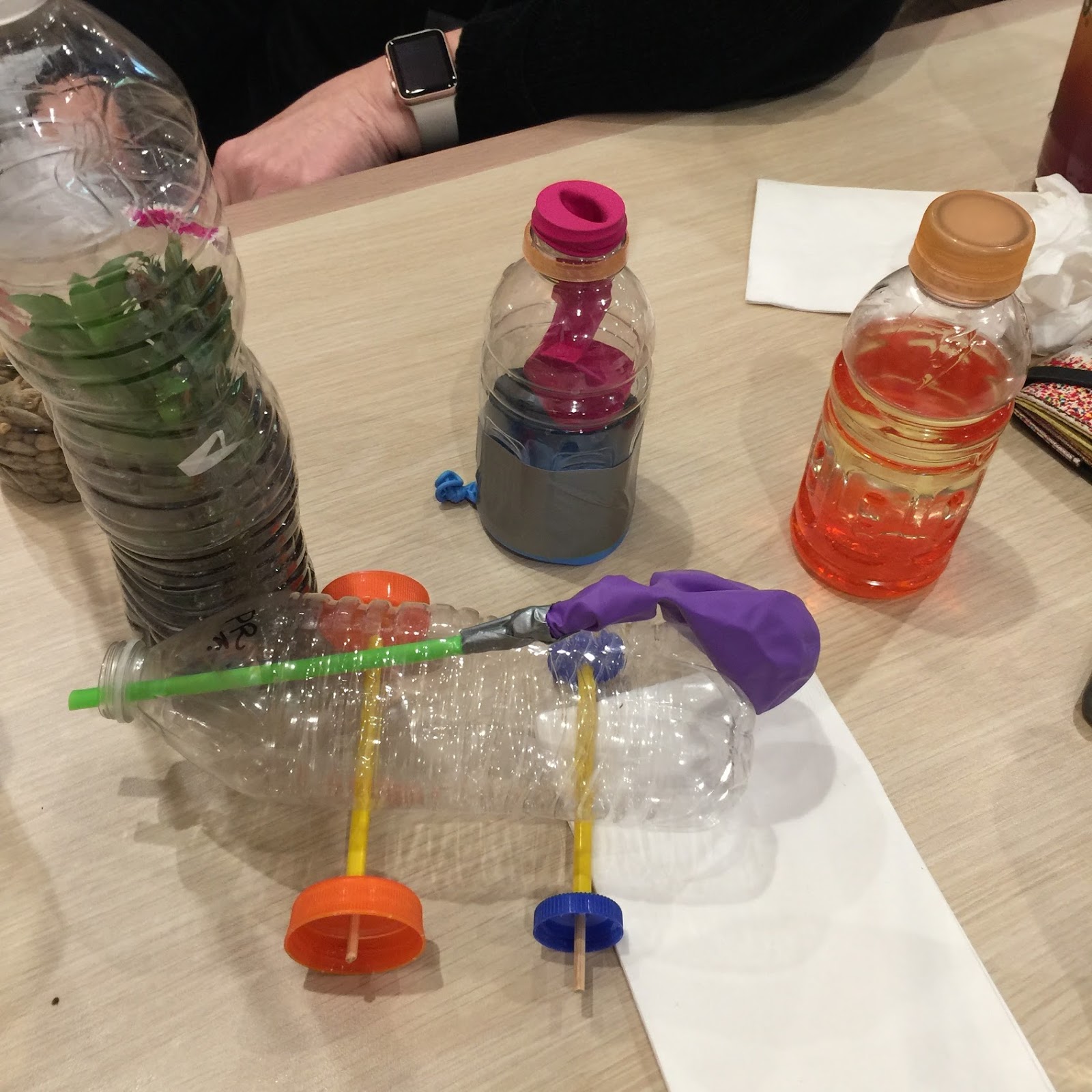 |
| Projects Created by Peggy Reimers at CAST 17 Conference in Nov, 2017 |
Check out this “junk” and discards. Each represents a powerful hands-on project that I never was exposed to in school, but would certainly have benefited from. In a STEM Makerspace, this kind of experience becomes foundational learning. Whether you are building a air-balloon powered car, a simulation of lungs and diaphragm, a terrarium or lava lamp, these experiences find expression in a makerspace.
Discover more from Another Think Coming
Subscribe to get the latest posts sent to your email.
 Another Think Coming